Human curiosity
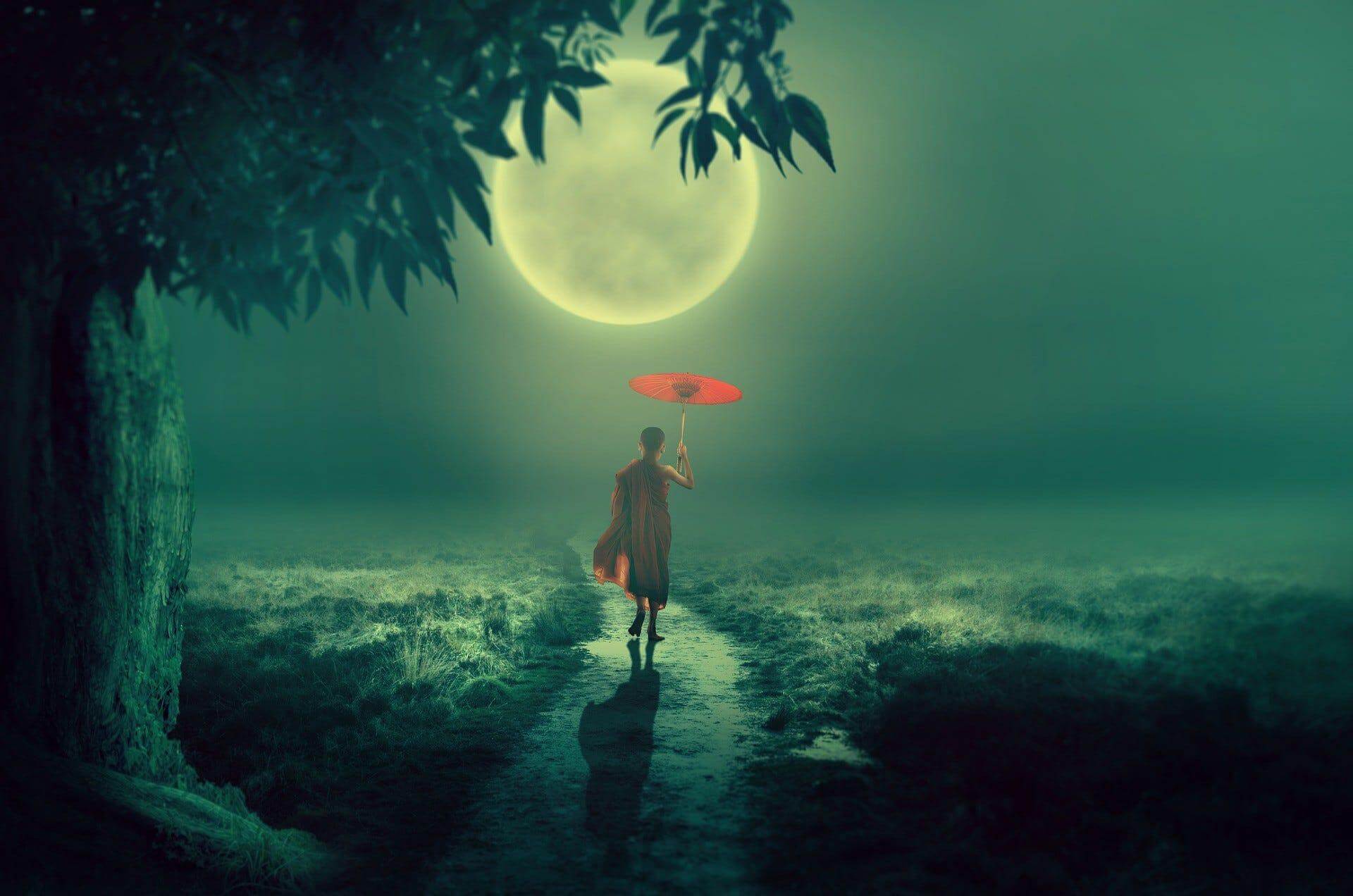
If a great connoisseur of the human soul can live like a beggar, on the streets, or in exile in the mountains of Tibet, all without affecting their ego (incidentally, see Epicurus and/or Diogenes the Cynic), my fear is: what couldn't this great genius of the synapses “produce” at NASA, in new products/services, in large laboratories, in human knowledge. I have no doubt that this enlightened being is fulfilled and radiant: surrounded by dogs, on the sidewalk, in Tibet. However: what about knowledge?
Could the avidity to be disruptive in knowledge be the ego whispering: be famous, (and/or) be significant?
Likes: a short circuit
As for being famous, “gazillions” (billions) of humans live surrounded by likes. Whether millions of likes — pop stars —, or thousands of likes, from those who have traversed and surround your life. The Facebook conglomerate (whats/instagram) perfected and provided this “short circuit” to people, without the obligation of being friends with a major network reporter or truly representing big news (big in terms of audience). They feed each other likes, and vice versa, in a great short-circuited uterine chain.
These gazillions of likes do not necessarily evolve human curiosity. They do create a well-being, yes (of the ego, certainly, if well-being with the ego isn't a paradox). As if it were a “mental masturbation” of the ego. It allows the production of one hormone or another for real — a well-being — using the artful (a poisonous snake?) ego.
I mean that seeking likes does not necessarily “produce rockets.” It does not necessarily produce knowledge for humanity.
Even more so with the likes industry of the Facebook conglomerate, a conglomerate that increasingly learns to inflate egos at a lower cost. And it's nobody's fault: except our own — we who created the demand — allowing the company to exploit the vein and sell ads on top of it.
The role of the ego in knowledge
I am interested in what comes next:
Is an ego necessary to effectively “produce rockets”?
Maybe yes — a little bit. Maybe it's not necessary.
(By “producing rockets” I mean producing major public advances in global human knowledge — I use the term to simplify)
If an ego is not necessary to “produce rockets”, then in this case human curiosity is something more essential than the superficial ego. It would be a nice plot, if it is “true.”
Only then come a few more little questions.
Waste of curiosity?
In this case, then, “beggars, geniuses, enjoying their knowledge of the soul, silent, satisfied, among dogs” would be “wasting curiosity”? Taking away from global public human knowledge new insights that this beggar could have creatively developed?
This is another interesting story (I admit a ‘wow!’):
Does the guru in Tibet have curiosity?
Or — à la Diogenes, the philosopher who goes to live in a barrel as a beggar, without caring, without ego pain — does this zen beggar have curiosity?
If this super zen beggar, profound connoisseur of the soul, has no curiosity — if this “guru” has learned, and truly learned, to understand that we are a soup of hormones, and that it is hormones, not real pain, that our “feelings” are — among various other discoveries, I suppose — then in this case, wouldn't this beggar-guru be wasting essential curiosity, depriving humanity of exercising its ability to publish new knowledge, instead of living “simply” content, among dogs?
Self-curiosity: what about the rest of us?
Note that here I am assuming the hypothesis that curiosity is essential, and not just a whim of the ego, in human beings. If it is essential — in the essence of the human being — isn't exercising this essential curiosity in self-discovery, alone, among dogs, a waste? Even if effective: the person lives until death close to ecstasy, fulfilled, warm diaphragm, embracing heart. But only for themselves. Wouldn't it be a waste? Yes or no? Even if effective (especially for them)? I suppose it wouldn't be enough for them to investigate only knowledge that helps with their own comfort, and besides that, not tell anyone about these discoveries they might eventually make (for example, how to prolong ecstasy. How not to care about “ecstasy.” How to be “simply” well). Would it be a waste of talent?
Assuming curiosity is part of our essence, wouldn't/aren't the beggar among dogs and the guru eternally on the mountain of Tibet wasting their innate capacity for curiosity? — I ask.
It can get worse:
If the guru in Tibet has curiosity — curiosity to know themselves —, then isn't exercising this curiosity only for themselves a controversial “selfishness”? In opposition to altruism, had they contributed to global public human knowledge by leaving their exile from time to time. (Incidentally, if they overcome the ego, remaining curious about oneself would be egotistical, paradoxically). But none of this is serious: it would indicate that the quest to suppress the ego was/is eternal.
What matters to me is: I propose the hypothesis that it would be a waste of human curiosity to be a great guru, yet quiet, without creating and/or much less sharing knowledge. Even if fully effective: for oneself. Perfect (for oneself). The knowledge would die with the guru.
Guru-and-scientist
What if “gurus” — the best ones, for real — didn't become self-contained, meaning, even without an ego, wonderful, zen, continued contributing to the evolution of global public human knowledge? And I mean the complete kit of human knowledge, that is, human and public knowledge, made available to humanity. That is: sharing knowledge as well (keeping it to oneself among the bushes of Tibet would be a jerk move!).
Here enters another slight paradox, but manageable: creating and, notably, sharing/publishing knowledge bears a strong resemblance to the need to feed the ego — even though it is entirely possible for the ego to be atrophied or almost null, and for the source of inspiration to be nothing more than essential human curiosity.
“We want rockets” — perhaps in our essence.
Practical implications
Despite very abstract questions, there are extremely practical implications depending on the possible answers to these seemingly abstract questions.
For example, if the truly “genius” human being, to the point of suppressing their ego and also creating a joy/radiance more independent of other events, suppresses along with it the need to feed global human curiosity with increasingly new public knowledge, then let us consider the following:
All gurus, curiosity ceases
Let's assume that all human beings reach this “guru” point, or whatever you want to call it. Under these circumstances, I propose that we would all live happily “in the forest.” Without needing to pave, nor needing to grab a smartphone, nor create currency, nor produce “equipment” on a scale. We could never stop being forest dwellers. We wouldn't even have “left paradise,” considering the most logical thesis that the biblical “departure from paradise” was adopting agricultural culture — leaving the forest, having to “pay property tax.” We wouldn't even need to have left the forest. Gurus that we would all be, “well” — simply put — we would be. Including living “well” with death. Including living well with often being hunted. Living well with not dominating the world. Living well even with the possibility of extinction. Living well even with our eventual total extinction, premature, due to tools we didn't create — happy, satisfied, knowing how to deal with our pains, just as we were. Gurus that we were. This scenario would also apply to the future: we would close rocket factories, cease the thirst for technologies, shrink the population — knowing how to deal with pain including that of death, without problems —, we would live “hand in hand” with full natural resources, with no thirst greater than the minimum necessary. Gathering mushrooms, apples, without shotguns. Hunting and being hunted, connected, without suffering from fear.
It is not necessary to consider the ideal hypothesis that all human beings turn into “gurus” — being able to live well with themselves, even in exile in mountains, without losing the smile at the corner of their mouth (warm heart). This ideal scenario is not necessary. It is also possible to analyze in percentages, statistically. So, if not all, but the more “gurus” are formed, given the hypothesis that being a guru extinguishes the need to create and share knowledge, then the more “gurus” convert, the advance in global human knowledge decreases in similar proportion. It would decrease. In this hypothesis.
All gurus, curiosity remains: essential curiosity
Now in the opposite hypothesis — if being or approaching being a “guru” does not diminish the thirst for knowledge, then the fire that fuels this thirst for knowledge is essential, inherent to the human being. Which fits well, incidentally, with the need to work in groups, if we wish to be less of a prey to other species. Our great strength is sociability.
“Our great strength is sociability”
(otherwise, one on one, we are easy prey in the forest). Perhaps it is this darwinistically strengthened sociability that pushes us to seek knowledge. To seek to create tools. So that together, we kill, instead of being killed by: bears, tigers, you name it.
Okay, so what, what would be the practical utility of knowing that sociability may be the essence of the search for knowledge, a search that would therefore be essential in us?
Well, there is a practical implication: this may mean that knowledge which does not help us “defeat the predator” is not essential.
Is it possible? A question not to be thrown away.
Speaking of predator:
Defeating the predator
Who would our predator be?
If tigers and wolves are in cages or, when they leave the forests, receive a tranquilizer dart and are carried back to the forest or are caged, then what are our predators?
The planet itself is a good candidate: full of burned kerosene, plastics, and these by-products of our tools in our way, making the planet itself flourish green, oxygenated, and full again is a way to “defeat a tiger.”
This time a blue and round tiger, but no less a predator, if “angry.”
Or walking even further into the future, we may have as our distant predator the predicted natural extinction of the sun — in this case yes, we may really need to invent rockets (intergalactic ones, heading towards new suns, these ones, but with millions of years to be created by human knowledge/curiosity).
I am interested, however, in the following question:
Our (poorly cared for) planet as a predator
I wanted to focus on dealing with the predator that is our own planet.
This challenge could push our knowledge — our essential curiosity, that curiosity connected to the need for survival — toward the need to preserve the planet. For our own survival.
A terrifying truth behind this fight?
However, if this is “merely” for our survival — against the predator that would be our own poorly cared for planet — then in its essence this would not be “affection/compassion” for animals and fauna. Ugly to say, but I dare, in this sequence of hypotheses, that we would be more focused on preserving ourselves than the other beings.
This applies in this sequence of hypotheses: human essential curiosity being tied to the need for survival.
Need for survival that requires the strength of the group — social ability — at least against tigers and wolves, as it was very long ago, when we still lived “in the forest.”
In this sequence of hypotheses, I dare propose that if we managed to create a stable planet for the human race, in theory, this solution could be with or without animals, with or without their fauna.
Crazy?
Following this hypothesis (even if terrifying — but here, these are just words: stay calm), today, then, we would confuse preserving the planet with the attitude of preserving fauna and flora and the little animals more because we don't know how — yet — to make a stable planet “full of solar panels, water, and actual concrete, with some kind of food possible in this format,” than out of real compassion for living beings.
Note that this frightening, bizarre theory, even if bizarre and frightening, matches many of our actual actions better; ask with me:
Do we really love animals? In zoos or outside them?
I repeat the question: do we really love animals? In zoos? Preserved in gene banks, so that when we master technology better, we can clone them whenever and wherever we want? In freezers? Far from our homes? Do we love them? (Kittens and puppies don't count, I mean all of them, obviously).
Let's remember that we have already “eaten the apple,” meaning we “fell from paradise,” meaning we left the forest. We left wildlife. Direct interdependence.
Forest on fire ten thousand miles away burns in London
Today, then, we only connect with the planet “when we burn the Amazon,” that is, out of fear of a phenomenon still much greater than our current knowledge, which is the biosphere as a whole. “Don't mess with the forest, it could screw up London and Paris,” something like that. Today. We worry about that, but we keep zoos tightly locked (since turning the key in zoo cages doesn't significantly affect the biosphere).
What if we master knowledge about the biosphere?
My fear is that if we ever master the understanding of the biosphere, we may notice that we don't need: ants, bees, plants, algae, whatever. We could engineer a flow that keeps us very well, without these beings. Then yes, we will know definitively if we really love animals, fauna and flora, or if we just fear the mismanagement of the biosphere and, therefore, our extinction.
And then we would know if we truly want, fundamentally, essentially, just our survival.
And to “get out of the way.”
What a fine “chip” this would be (is?).
Powerful too.
Another somewhat interesting question.
Responses